
Early Heart Attack Care (EHAC)

Heart Attacks Have Beginnings

Heart attacks don’t always happen suddenly. In fact, many people experience early warning signs hours, days, or even weeks before a heart attack occurs. The goal of Early Heart Attack Care (EHAC) is to raise awareness of those warning signs and empower people to seek help before a major cardiac event happens.

At Columbus Regional Health, we support EHAC as part of our commitment to heart health and prevention. Recognizing the signs early—and acting fast—can make all the difference.

Know your risk factors and make plans to discuss any of these that you might have with your provider:

  • Chest pain, pressure, burning, aching, or tightness - it may come and go
  • Family history of cardiovascular disease
  • For women it can also include birth control pills, a history of pre-eclampsia, gestational diabetes, or having a low birth weight baby
  • High blood pressure
  • Metabolic disease, diabetes, or illnesses
  • Overweight or obese
  • Sedentary lifestyle
  • Using tobacco products
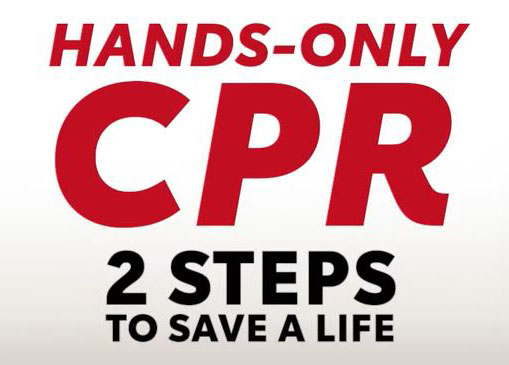
Hands Only CPR graphic

Learn Hands-Only CPR

Learn the two simple steps of Hands-Only CPR if you witness a teen or adult suddenly collapse: Call 9-1-1 and Push Hard and Fast in the Center of the Chest until Help Arrives.

Watch CPR Video
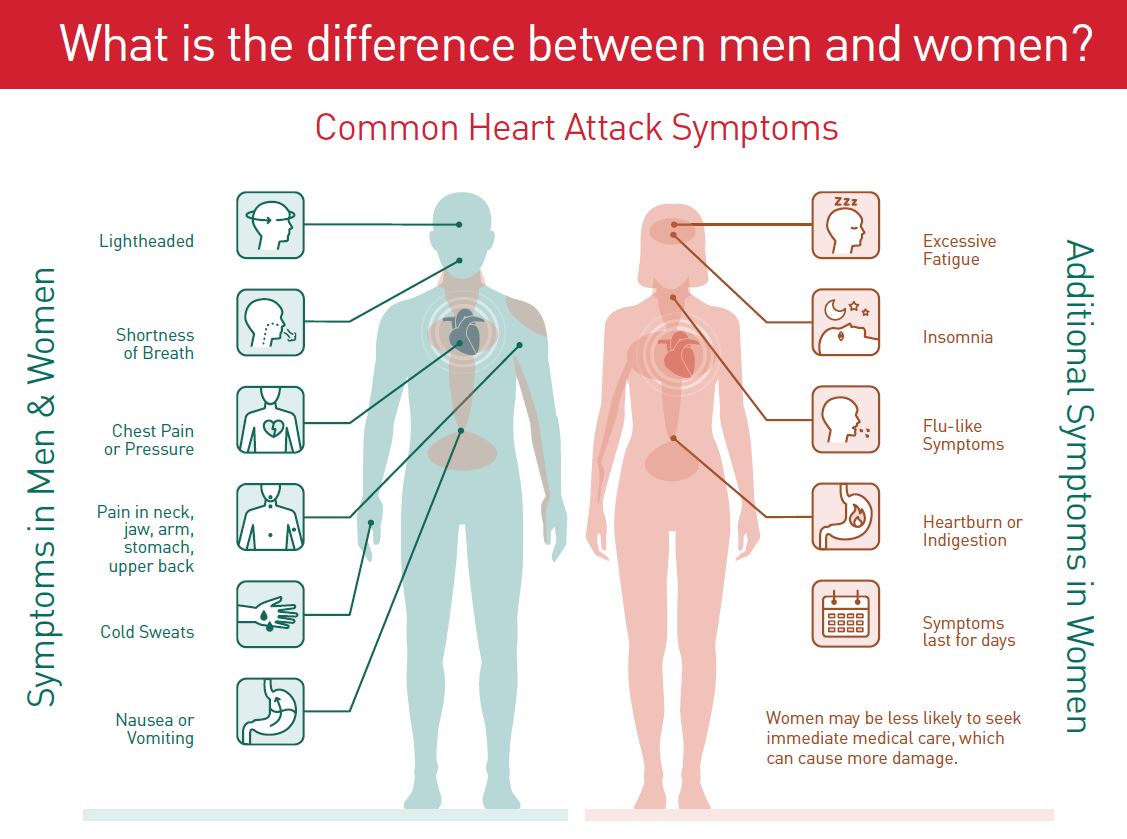
Infographic showing different heart attack symptoms between men and women.

Learn the Early Signs and Symptoms of a Heart Issue

Someone might have one or more of these common symptoms:

  • Anxiety
  • Back pain
  • Chest pressure, squeezing, aching, or burning
  • Excessive fatigue or weakness
  • Feeling of fullness
  • Jaw pain
  • Nausea or vomiting
  • Pain that travels down arm(s)
  • Shortness of breath

When symptoms start, they can be mild or come and go. Over time, the symptoms and pain become more intense. Stay alert and always pay attention to chest pressure. Most heart damage can occur within the first two hours of a heart attack. Know the subtle signs of a heart attack and act on them - BEFORE HEART DAMAGE OCCURS.

What are ATYPICAL SYMPTOMS?

Sometimes there are additional signs and symptoms of a heart attack. Someone may not complain about pain or pressure in the chest but experience:

  • A sharp or “knife-like” pain that occurs with coughing or breathing
  • Pain that spreads above the jawbone or into the lower body
  • Difficult or labored breathing

Commit to Save a Life

  • If someone collapses, call 9-1-1
  • Perform hands-only CPR
  • Know where an AED (Automated External Defibrillator) can be located
  • Deploy the AED if needed by following the automated instructions

If you or someone else is experiencing symptoms of a heart attack, call 9-1-1 immediately.

For non-emergency concerns or to schedule a heart health evaluation, contact Southern Indiana Heart and Vascular at 812-379-2020.